B2B Monday Myth: You Need to Get a Brand Video Made — Quick!
by MGB2B

The Myth: You Need to Get a Brand Video Made — Quick!
The Truth: Figure Out the Content Before You Move Forward with Video
Video marketing isn’t just for the consumer market. The best perks of video marketing include engagement, brand awareness, and lead generation — which are all very important for B2B brands. But this isn’t breaking news. According to the 2016 B2B Content Marketing Benchmarks, Budgets, and Trends — North America report, 79% of B2B marketers are using video as a content marketing tactic. So if you haven’t created or shared any videos, you should shoot a quick one and get it out there ASAP, right?
Wrong. The content of your video matters. Good video content doesn’t need to be high-quality (though if you can afford better production, you should do it) nor does it need to go viral; it just needs to have a message that matters to your customer base and triggers a connection to your brand, product, or even other customers. If you can pull this off in an entertaining or insightful way, you’ll be miles ahead of the poor video content that is out there today.
More than anything it’s important to sit down and plan. What are your potential customers looking for? What do they need from you and how can your video help deliver it? Always start with strategy.
In the meantime, here are a few video content ideas you can look through and see if any might be a good fit for your customers.
Engaging B2B Video Content Ideas:
- How-To Guides — Before turning to you, customers may try to tackle their problems on their own. Help them with the first steps, and you will be top of mind for when the problems become too big for them to handle on their own.
- Case Studies — This is a great way to showcase what you have to offer. Remember though that your customers don’t care about you, but rather about solving their problems. Use this format to address how your products or services have solved challenges they can connect to.
- Weekly Podcasts — A series is a great way to keep people coming back for more. If you stay committed to this sort of project, you will have created for your company an archive of useful problem-solving content. But you have to make sure you have someone (maybe you) in your organization who is willing to make the commitment and stick with it. It’s not something that can be done sporadically.
- Customer Testimonials — There is nothing more powerful than an emotional connection. And it is easier for people to form connections with other people than it is for people to form a connection to a product. If you have clients or customers who can do heartfelt testimonials and have a good demeanor on camera, see if they’ll be willing to help out. You’ll be surprised how many people will be.
Yes, video marketing has skyrocketed across all industries, but that doesn’t mean you should rush into filming something that no one will care about. Take the time to focus on the content of your video and, more importantly, what you want the video to accomplish before diving in head-first.
Continue ReadingB2B Monday Myth: You Can’t Get New Clients on LinkedIn
by MGB2B

The Myth: You can’t get new clients on LinkedIn.
The Truth: If you play your cards right, LinkedIn can be lucrative for your brand.
LinkedIn has become somewhat of a playground for spam and unsolicited sales pitches, an approach that you should undoubtedly avoid when trying to make connections and reach prospects. You might wonder: If I can’t pitch on LinkedIn, how do I use it to drum up business? One of the best ways to form lucrative and lasting connections is by using LinkedIn’s group discussion feature. So how does your business turn something as simple as a LinkedIn group into new business?
Try this simple and effective strategy to use LinkedIn for lead generation:
- Join Other Groups Before Establishing Your Own. The best way to understand how groups operate is to see how other people are using them. Join groups that are relevant to your company and your industry. And make sure you participate. Becoming a part of the discussion gives you the opportunity to establish yourself, and your brand, as a thought leader. Once you’ve got the hang of it, its time to start your own group.
- Narrow the Target. Find Your Niche. This step is crucial when it comes to using LinkedIn for lead generation. The execution of your new group must be specific in order to attract the right target markets. For starters, be sure the category of your group highlights what your company is/should be known for. Again, here’s where other LinkedIn groups might come in handy. Browse other LinkedIn Groups started by established businesses in your industry. Are they much different? The same? How do their ideal clients compare with yours? See what resonates, what doesn’t work, and most importantly – what you can do differently to set yourself apart from the pack.
- Use Accurate Words in Your Title and Description. While optimizing your descriptions with keywords will no longer get you anywhere in terms of search, the words you use are still important. Choose words that accurately describe what your discussion group will bring to the table, you’ll increase the chances that your targets will understand who you are and what you wish to accomplish. Your mission should be very clear and impactful. Groups with ambiguous descriptions are deemed to lack focus and value. Often times, poorly described groups are a disguise for marketers who want to dump buckets of spam and unsolicited pitches all over the newsfeed. Don’t let anyone get the wrong idea. Leave a positive impression on your members – any of them could easily evolve into a new client.
- Keep Your Group Open. This allows anyone to join and can gain you more visibility than a closed group. You needn’t worry about widening your net; LinkedIn requires vetting of members for all groups, open or closed. Be very clear as to who should be accepted into your group by setting your “Group Rules.” You can encourage your members to share the group and specific group discussions in order to grow your member base.
- Invite People to Join. You have clients and colleagues, new and old, who can benefit from your discussion group. Make sure you invite them to join your group, so you can grow your base with those who already support your mission and have interesting things to contribute.
- Be a Leader. Closely manage and lead your group to make them feel empowered and engaged. Ask them provocative questions and contribute content that will get the conversation going. It only takes a little friction to ignite a spark. In addition, don’t be afraid to praise members who are most involved. They are the ones most likely to become customers if they aren’t already.
- Promote. Subtly. In order to reach new prospects on other LinkedIn discussion groups, you can politely mention you have started your own interesting group that members should consider joining. This cannot be shameless self-promotion. Carefully craft your message once you’ve been participating in a conversation, and only push them to your group if what you are discussing is relevant. People will be disappointed if they are sent to a group that has nothing to do with the current conversation.
LinkedIn has taken steps to keep spammers out and good content in. This means the conversations you start in your group need to be authentic and engaging. It requires time and is a slow burn in terms of lead generation, but it’s a great way to generate quality leads.
Think of a discussion group as just one way to use LinkedIn for lead generation. If you navigate it correctly, you’ll have a forum to cultivate successful business relationships for years to come.
Continue ReadingThe Right Creative Media Mix to Feed Your B2B Sales Funnel
by MGB2B
With so many advertising options out there, it can be difficult to sift through the clutter and decide what the right B2B media mix is for your business. A media mix is the combination of communication channels you can use to market your business. It can include print and online ads, radio, television, billboards, websites, email, and social media. The mix will vary depending on your specific marketing goals; however, there is always one commonality: we want the consumer to take action.
That action could be visiting a landing page, filling out a contact form, or making a purchase. Whatever the desired action may be, the goal of your marketing mix is to drive as many customers as possible to that action. How? By feeding each step of the sales funnel with the right media tools.
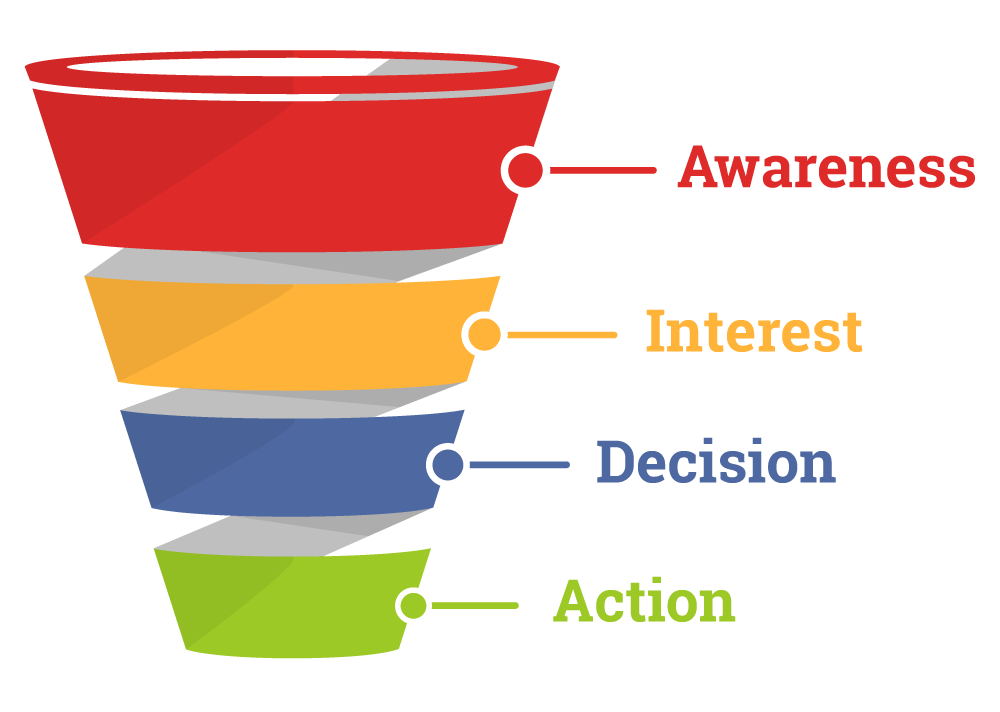
Step 1: Awareness
What It Is – The customer is aware of the existence of your product or service, but doesn’t know much about it. Yet.
Media Tools – Broad reach media such as print ads in trade publications, radio, and television ads on targeted channels.
Step 2: Interest
What It Is – The customer begins actively expressing an interest in your product or service, but may still be skeptical.
Media Tools – Targeted, informational media such as paid social media posts with industry-related topics, informational webinars with affiliate trade publications, sponsored e-blasts through trade publications, paid search.
Step 3: Decision
What It Is – The customer is interested, engaged, and ready to make their decision. The goal is to make sure it’s you they are choosing.
Media Tools – Targeted, sales-focused media such as direct email campaigns, paid social media, targeted online display advertising, paid search.
Step 4: Action
What It Is – The customer is ready to take the next step towards purchasing your product.
Media Tools – Continuation of media from Step 3, with renewed focus on driving customers to your point of sale (website, contact form, phone number, etc.).
There is no absolute formula for making a sale. But by putting together an enticing media mix instead of putting your eggs all in one basket, you can guide your potential customer through the sales funnel – and increase your likelihood of closing that sale.